Every year, thousands of Nigerian and Ghanaian medical graduates make the bold decision to take their skills abroad. Whether it’s the United States, the United Kingdom, Canada, Australia, or Ireland, the dream is the same: a world-class medical career, better infrastructure, and life-changing opportunities.

But before you can write a single prescription in a foreign country, you must pass a licensing exam, and navigating five different exam systems across five continents is no small task. Add in the challenge of paying registration fees in USD, GBP, CAD, AUD, or EUR from Nigeria or Ghana, where card declines, forex restrictions, and low transaction limits are a daily reality and the process becomes even more daunting.
This guide, brought to you by Radius, covers the five most important medical licensing exams that Nigerian and Ghanaian IMGs pursue: the USMLE (USA), AMC MCQ (Australia), MCCQE (Canada), PLAB (UK), and IMC Assessment (Ireland). We cover what each exam tests, how to register, how to pay from Africa, how to prepare, and what career outcomes await you on the other side.
At a Glance
Use this table to quickly compare your options before diving into each exam in detail.
|
Feature |
🇺🇸 USMLE (USA) |
🇦🇺 AMC MCQ (Australia) |
🇨🇦 MCCQE (Canada) |
🇬🇧 PLAB (UK) |
🇮🇪 IMC (Ireland) |
|
Body |
NBME / ECFMG |
Australian Medical Council |
Medical Council of Canada |
General Medical Council |
Irish Medical Council |
|
Parts |
3 Steps |
2 Parts |
2 Parts |
2 Parts |
Assessment |
|
Currency |
USD |
AUD |
CAD |
GBP |
EUR |
|
Approx. Fee |
~$670/step |
~$1,100 AUD |
~$1,215 CAD |
~£239 + £857 |
~€390+ |
|
Portal |
ecfmg.org |
amc.org.au |
mcc.ca |
gmc-uk.org |
medicalcouncil.ie |
1. USMLE — United States Medical Licensing Examination
The USMLE is the world’s most competitive medical licensing exam and the most sought-after by Nigerian and Ghanaian doctors who want to practice in the United States. Jointly administered by the NBME and the ECFMG, it is a three-step series that tests basic science, clinical knowledge, and independent medical decision-making.
The Three Steps
• Step 1 — Basic medical sciences (anatomy, physiology, biochemistry, pathology, pharmacology, microbiology). Now Pass/Fail.
• Step 2 CK — Clinical Knowledge: 318 MCQs over 9 hours. This score is now the primary differentiator for residency applications.
• Step 3 — Clinical management and independent practice. Taken after entering a residency program.
Registration Process for IMGs
• Apply through ECFMG at ecfmg.org for credential verification and certification.
• Once ECFMG-certified, apply for your chosen Step via the NBME portal.
• Pay registration fees in USD via Visa or Mastercard (international transactions must be enabled).
• Receive your scheduling permit, then book your Prometric center slot.
• Nigerian and Ghanaian candidates commonly test in South Africa, Ghana, Egypt, or the UK.
Preparation Resources
• UWorld — the gold-standard question bank for USMLE
• First Aid for the USMLE Step 1 & 2 — essential textbooks
• Amboss — integrated question bank with clinical reasoning tools
• AnKing Anki deck — spaced repetition for pharmacology and microbiology
• NBME Practice Exams — official self-assessments predictive of real scores
Pro tip: A Step 2 CK score of 240+ significantly boosts your chances in competitive specialties like surgery, orthopaedics, and radiology.
2. PLAB — Professional and Linguistic Assessments Board
The PLAB is the most popular route for Nigerian and Ghanaian doctors entering the United Kingdom. Administered by the General Medical Council (GMC), it assesses whether international medical graduates meet the knowledge and skills standard of a newly qualified UK Foundation Year 2 (F2) doctor.
The UK remains one of the top destinations for West African doctors, with hundreds of Nigerians and Ghanaians currently working in NHS hospitals across England, Scotland, Wales, and Northern Ireland.
PLAB 1 and PLAB 2
• PLAB 1 — 180-question, single best answer (SBA) MCQ paper. Sat at British Council centres globally, including Lagos, Accra, and Abuja.
• PLAB 2 — An Objective Structured Clinical Examination (OSCE) held exclusively at the GMC’s clinical assessment center in Manchester, UK.
How to Register
• Create a GMC Online account at gmc-uk.org.
• Verify that your primary medical qualification (PMQ) is listed in the GMC’s approved list.
• Provide an IELTS Academic score of 7.5+ overall (or OET Grade B) for English proficiency.
• Register and pay for PLAB 1. Fee is approximately £239 GBP — payable by international card.
• After passing PLAB 1, book PLAB 2 in Manchester.
Key advantage for Nigerian and Ghanaian doctors: PLAB 1 is available at British Council test centers in Lagos and Accra, meaning you can take Part 1 without leaving West Africa.
Preparation Resources
• Plabable — the leading PLAB-specific question bank
• PassMed — SBA practice questions mapped to GMC blueprint
• Oxford Handbook of Clinical Medicine — essential clinical reference
• BMJ Learning — free modules on UK clinical guidelines
3. AMC MCQ — Australian Medical Council Examination
The AMC MCQ examination is the first stage of a two-part assessment that grants international medical graduates general registration in Australia. It is administered by the Australian Medical Council and tests clinical knowledge in the Australian healthcare context.
What the Exam Covers
• Internal Medicine, Surgery, Pediatrics, Obstetrics & Gynecology, Psychiatry, General Practice
• 150 clinical scenario-based MCQs in 3.5 hours at Pearson VUE centers
• Australian clinical guidelines, the Medicare system, and local drug nomenclature are tested
How to Register
• Create a candidate account at amc.org.au and submit your medical degree for primary source verification.
• The AMC verifies credentials directly with your institution — begin early, this can take weeks.
• Apply for the MCQ exam and pay in AUD via Visa, Mastercard, or bank transfer.
• Book your test at a Pearson VUE center. Centers exist in Nigeria, Ghana, and across Africa.
Preparation Resources
• AMC Question Bank — official practice questions from the AMC
• eTG Complete (Therapeutic Guidelines) — essential for Australian clinical protocols
• MIMS Australia — Australian drug names and dosages
• Online IMG study communities on Telegram and Facebook
4. MCCQE — Medical Council of Canada Qualifying Examination
Canada is rapidly becoming one of the top destinations for Nigerian and Ghanaian doctors, particularly through provincial nominee programs that prioritize healthcare workers. The MCCQE is the licensing exam administered by the Medical Council of Canada (MCC), and it opens the pathway to residency through CaRMS.
MCCQE Parts
• Part I — Computer-based MCQs and Clinical Decision Making (CDM) cases. ~8 hours across two sessions. Tests all major clinical disciplines through a Canadian lens.
• Part II — OSCE held at designated Canadian simulation centers. Tests physical examination, communication, and clinical procedure skills.
Registration Steps
• Register at mcc.ca and create your candidate profile with verified medical degree documentation.
• Confirm your medical school is in the World Directory of Medical Schools, recognized by MCC.
• Apply during an open registration window — windows are competitive; apply early.
• Pay in CAD via Visa, Mastercard, or bank transfer. Part I fee is approximately $1,215 CAD.
• Book your MCCQE Part I at a global Prometric center.
Important: The MCCQE is available in both English and French. Canadian-specific guidelines (e.g., Canadian drug names, provincial healthcare laws) are tested. Study materials should reflect the Canadian context.
Preparation Resources
• Toronto Notes — the definitive Canadian clinical review
• CanadaQBank — MCCQE-specific practice questions
• MCC Objectives — the official content blueprint, free at mcc.ca
• UWorld — strong supplement for clinical reasoning
5. IMC Assessment — Irish Medical Council
Ireland is an emerging and increasingly attractive destination for Nigerian and Ghanaian doctors. With English as the working language, a rapidly growing healthcare system, a pathway to EU residency rights, and a strong Nigerian and Ghanaian diaspora community, Ireland is worth serious consideration.
To practice medicine in Ireland, international medical graduates must register with the Irish Medical Council (IMC). Non-EEA graduates typically go through a competence assessment pathway that may include a clinical assessment, supervised practice requirements, or recognition of specialist qualifications, depending on your specialty and experience.
Key Requirements
• Hold a primary medical qualification from a recognized medical school.
• English language proficiency: IELTS 7.0+ overall, or equivalent OET/PTE score.
• Apply for registration at the Medical Council.ie, submitting all primary source documents.
• The IMC conducts competence assessments for non-EEA graduates outside the EU Directive pathway.
• Fees are paid in EUR via international card or bank transfer.
Career advantage: Irish medical registration grants the right to work across EU member states under the European Professional Card (EPC) framework, opening doors beyond Ireland.
Paying Exam Fees from Nigeria and Ghana: The Honest Truth
Exam registration fees are charged in foreign currencies (USD, GBP, AUD, CAD, EUR), and Nigerian and Ghanaian candidates consistently face card declines, low transaction limits, and international payment blocks that can derail their timelines.
Common Payment Issues
• Nigerian naira cards declined on international portals (especially USD-denominated sites)
• Low single-transaction limits set by Nigerian and Ghanaian banks
• Forex scarcity causing card top-up failures
• Ghost debit — money deducted, but registration not confirmed
How Radius Helps
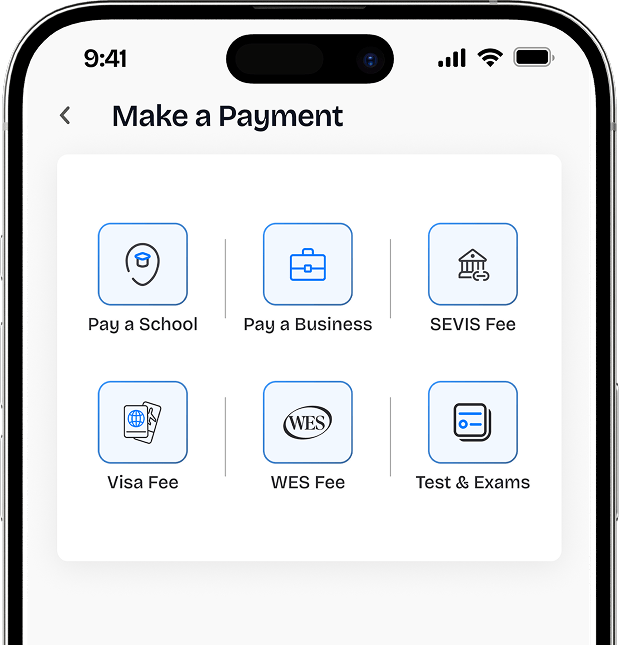
Radius was built specifically to solve this problem for Africans making international payments. With Radius, you can pay your USMLE, PLAB, AMC, MCCQE, or IMC registration fees in your local currency, naira, or cedis, and we handle the international transfer on your behalf, at competitive exchange rates, with zero failed transaction headaches.
Thousands of Nigerian and Ghanaian doctors and students have successfully used Radius to pay their USMLE, IELTS, PLAB 1, and other international registration fees.
Universal Study Strategy for Nigerian & Ghanaian IMGs
Regardless of which exam you are preparing for, the following strategies are proven to work:
• Build a 3–6 month structured study plan divided into content review, question bank practice, mock exams, and a final high-yield review week.
• Use question banks daily (40–80 questions per session) under timed, exam-like conditions. Study every explanation, not just your wrong answers.
• Learn the clinical context of your target country — Australian, Canadian, UK, or US guidelines differ significantly from what you learned in medical school.
• Use Anki (spaced repetition) for pharmacology, microbiology, and biochemistry.
• Take at least four full-length mock exams in the final month of preparation.
• Protect your mental health: build rest days into your schedule. Burnout is the most common cause of preparation failure.
Your Next Step
Whichever country you choose, the United States, the United Kingdom, Australia, Canada, or Ireland, the pathway begins with a single exam. The exam is not the obstacle, but the door.
Nigerian and Ghanaian doctors are among the most talented, hardworking, and adaptable medical professionals in the world. Every year, IMGs from Lagos, Accra, Ibadan, Kumasi, and beyond pass these exams and build extraordinary careers abroad. You can be next.
When you’re ready to pay your registration fees, Radius is here. We’ve helped thousands of African doctors and students make their international payments smoothly, securely, and at fair rates.