Every year, thousands of Nigerians pay to prove they speak English, while a larger number voluntarily give up their study abroad dreams because of English Proficiency requirements. That is the irony at the centre of this debate. Nigeria has numerous languages, but English is the official language used in schools, universities, government offices, newsrooms, and boardrooms. The system makes it compulsory that at least the first 16 years of education (from Primary to secondary) be entirely in English. Many Nigerians find that request hard to swallow.

Yet before they can study or work abroad, many must still sit a standardised test like the IELTS, which expires in two years, to prove it in many countries. If the opportunity doesn’t materialise in that window, you have to write the test again. Many Nigerians find that request hard to swallow.
One bad move can pause a dream
The scoring stakes make things worse. A single test on a single day can determine whether years of academic preparation lead anywhere. Nerves, unfamiliar accents in the listening section, or an essay prompt that rewards a specific rhetorical style can knock a fluent speaker below the cutoff. Nigerians who have taught English, published in English, or built careers using English have failed these tests. That outcome does not read as a fair measure of ability. Does this measure competence or a systemic monetisation of migration pathways?
The requirement itself is not unreasonable on its face. Universities and immigration authorities have a legitimate interest in setting language standards. A student who cannot follow a lecture will struggle. An employer wants staff who can communicate on the job. That objective makes sense. The problem is the process built around it. The process treats a high-proficiency nation the same as one with no English instruction at all.
New data makes the irony harder to defend. The 2025 EF English Proficiency Index ranks Nigeria as the fifth-best English-speaking country in Africa.EF assessed English skills across 123 countries and regions, using data from 2.2 million test takers. It included speaking and writing skills, measured using artificial intelligence technology.
The Financial Checkpoint
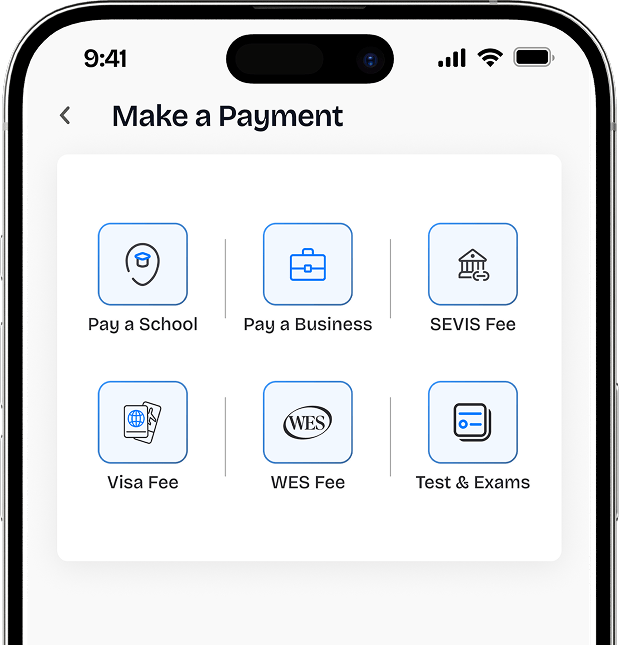
For many Nigerians, the test has become another financial checkpoint in an already expensive migration journey. A single IELTS attempt costs around ₦299,000 for both the Academic and General Training modules. That fee sits on top of application fees, transcript fees, visa fees, and tuition deposits.
Policy is shifting, but only in patches. A growing number of universities accept a grade of C6 or higher in WAEC or NECO English Language as a waiver for IELTS, and some institutions exempt applicants who studied in English. That flexibility does not extend everywhere.
A Nigerian can gain admission to one university without a test, get rejected by another for lacking one, and then discover that immigration officers or a professional licensing body apply yet another standard entirely. Canada shows the same pattern. Some universities accept prior English instruction as proof. Others still demand a fresh IELTS or TOEFL score regardless of academic history. The outcome often depends less on a candidate's actual ability and more on which desk processes the file.
The Caribbean Comparison
There is also a comparison Nigerians keep raising, and it is a fair one. Students from Barbados, Guyana, the Bahamas, Belize, Antigua and Barbuda, Dominica, and Grenada are widely exempt from English proficiency testing for UK admission. However, the UK recognised them as majority English-speaking countries, unlike Nigeria.
Nigeria also shares the same colonial history of English instruction. Per the 2025 ranking, Nigeria scores higher on independent proficiency measures than several countries that continue to waive the requirement. The inconsistency is not really about language. It is about which nations an institution chooses to trust.
Technology has also changed how proficiency can be judged. Additionally, policy has not caught up. Admissions officers now run virtual interviews. Employers assess candidates over video calls, while visa officers speak with applicants directly.
Each of these is evidence of how a person communicates. The evidence that often tells an institution more than a test taken alone in a booth. Even the exam itself has modernised, with IELTS in Nigeria now delivered fully by computer and results returned within five business days instead of thirteen. While faster delivery is progress, it does not answer the harder question of what the test is actually proving.
There is a pain point we should bring to the picture. Test centres have built entire coaching industries around scoring technique rather than language skill. Candidates spend weeks learning timing and formatting tricks. A test built to measure communication increasingly rewards familiarity with its own format instead.
None of this argues for scrapping English testing outright. It remains useful for applicants from countries where English is genuinely a second or third language. It also gives institutions a shared benchmark across different education systems.
The stronger case is for proportion. Weigh prior education completed in English, national exam results like WAEC and NECO, and independent data like the EF ranking, alongside the test rather than instead of it. Reserve the full exam for cases where real doubt exists, not as a blanket rule applied to a nation that now measures among the most proficient in the world.
The Real Question
Nigeria remains one of Africa's largest sources of international students and skilled professionals. Its graduates work in hospitals, laboratories, universities, and technology firms across the globe. Meeting a host country's language expectations is fair. Requiring people to repeatedly prove proficiency in a language they already rank highly in warrants closer scrutiny.
The debate has moved past whether English proficiency matters. The real question is whether the systems built to verify it across universities, immigration offices, and licensing boards have caught up with what the data already show. For many Nigerians, the issue was never English. It is whether the system checking for it still makes sense.